Following on from our first Wave Release blog post, in part 2 we will explore the new features and details of the upgrades across:
Financial management – AI assistance with payables, expenses, and approval workflows
Reporting and analytics – richer, more flexible financial reporting with Excel export and scheduling
Electronic documents – broader e-invoicing support with reduced dependency on third-party add-ons
E-commerce – deeper Shopify integration with better data flow and operational visibility
Financial Management: Smarter, More Controlled
Financial Reporting Enhancements
Reporting has received a significant upgrade in this wave. Finance teams can now export financial reports directly to Excel for further analysis, schedule reports to run automatically at defined intervals, and generate reports segmented by dimension – for example, by department, cost centre, or project. A built-in analysis view also enables on-the-fly analysis directly from item lists, such as analysing stock levels by location.
Approval Workflows Extended
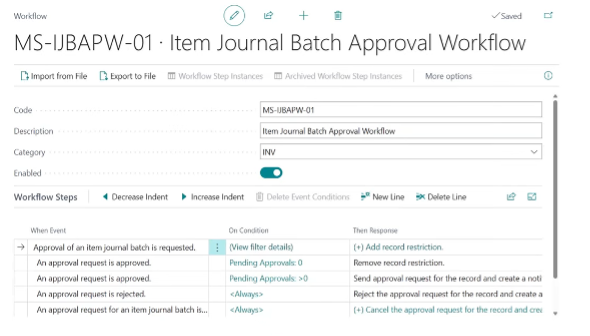
Approval workflows have been extended to item journals (including physical inventory, output, and consumption journals) and requisition/planning worksheets. Batches cannot be edited, posted, or converted into purchase documents until an approver has reviewed and approved them – adding a critical control point for inventory and procurement decisions.
Item journals and requisition worksheets now support full approval workflow capabilities, preventing posting until sign-off is received
Withholding Taxes
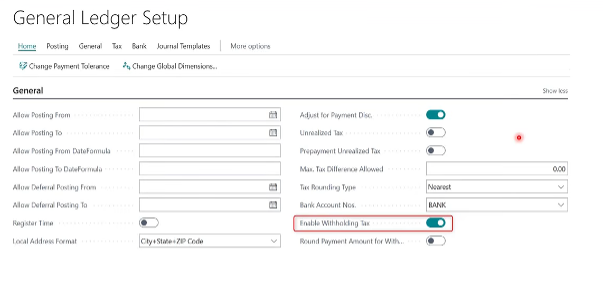
Business Central now supports withholding tax calculation for vendors across multiple regions. The system automatically withholds the correct tax amount when paying vendor invoices and reduces the payment accordingly. Configuration is handled through dedicated posting groups, and withholding tax entries are created automatically on posting.
Purchase Invoice to Receipt Matching
A new capability allows you to pull from a purchase order to an invoice and clearly identify what has not yet been receipted. This resolves a long-standing pain point in three-way matching for partially received orders, and optionally allows missing receipts to be created automatically during posting.
Fixed Asset Depreciation by Percentage
Fixed assets can now be depreciated using a percentage-based method directly within Business Central, providing greater flexibility in how your organisation accounts for asset value over time – useful for sectors with non-linear depreciation patterns.
Expenses and Audit Capability
Enhanced expense management capabilities improve audit trails and compliance reporting. For UK customers, this aligns better with P60-style reporting requirements and gives finance teams greater visibility into expense workflows and approvals.
Electronic Documents: Less Add-On Dependency, More Capability
The e-documents framework in Business Central has been significantly extended in this wave, reducing the need for third-party add-ons and opening the door for broader digital document exchange across the business.
PEPPOL and E-Invoicing Updates
The PEPPOL network integration has been updated to support more compliant e-invoicing out of the box, particularly for organisations already using standard e-invoicing formats across the EU and UK. The e-documents module now handles a broader range of document types beyond sales invoices, including shipments and transfer shipments.
Self-Billed Invoices (Purchase Side)
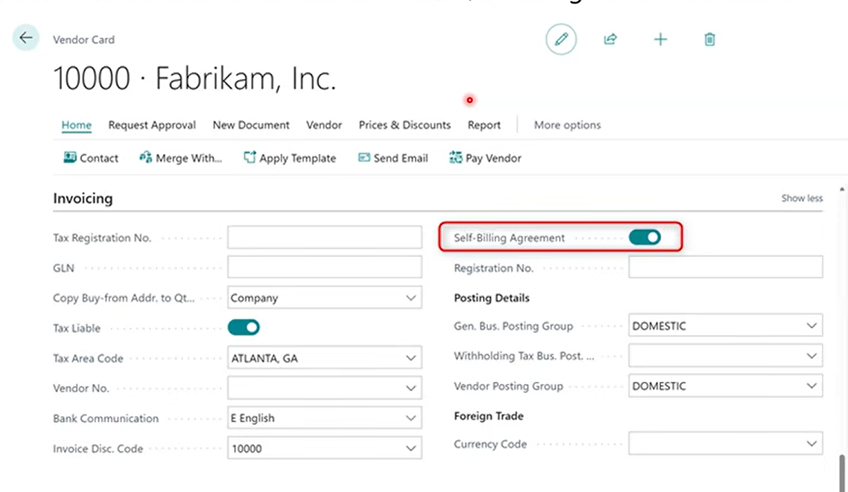
A new feature supports self-billed invoices – particularly relevant for transport and logistics sectors – where the buyer generates the invoice on behalf of the supplier. These are flagged appropriately for audit purposes on the purchase side, with a fix applied for a previously reported incomplete number sequence issue.
Self-billed invoicing is available on the purchase side only and is flagged automatically for audit purposes, keeping your compliance reporting clean.
E-Commerce: Shopify Gets Even More Powerful
The Shopify connector continues to evolve based on customer feedback. In this wave, key improvements give you greater control over product presentation and catalogue management across your e-commerce channel.
Item Variant Images
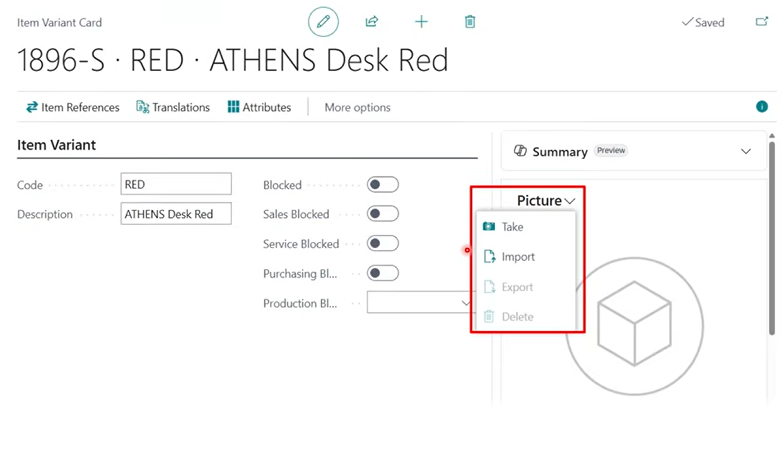
You can now assign specific images to individual item variants. If you sell a product in multiple colours or sizes, each variant can have its own product image stored on the Item Variant Card and synchronised with your Shopify storefront – improving product presentation without manual workarounds.
Individual images can now be assigned to item variants and synchronised with Shopify, improving product presentation for multi-option products (Source: Microsoft Learn / 2026 Wave 1 Release Plan)
Item Variant Attributes
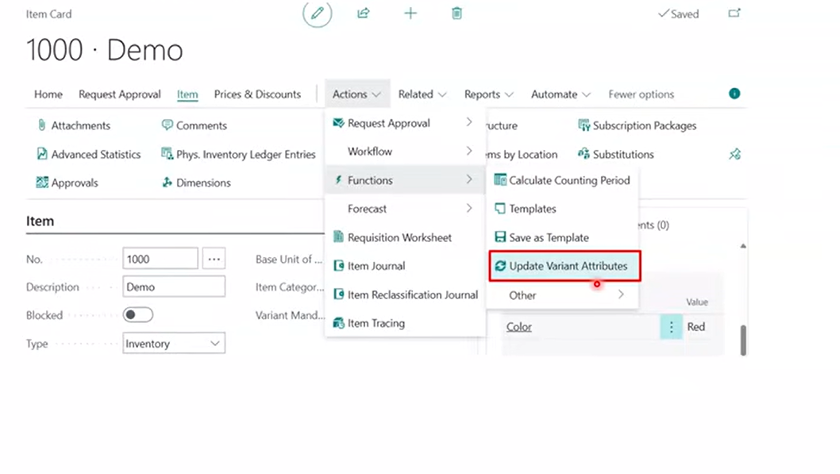
Variants now support richer attribute data, giving you greater control over how product options are defined and presented across your e-commerce channel.
Custom Product Collections
Business Central now supports synchronisation of custom product collections from Shopify. You can import collections, manage them centrally, and assign items to the correct collections for export – particularly useful for managing tax override scenarios by product category within Shopify.
Updated Shopify API (January 2026)
The Shopify Connector now uses the Shopify API released in January 2026, aligning Business Central with the latest inventory mutation logic and ensuring continued support beyond the June 2026 deadline for the previous API version.
Look out for our third & final instalment – covering Sustainability Management, Regional Compliance and Admin Migration.