Microsoft’s 2026 Release Wave 1 for Dynamics 365 Business Central is one of the most significant updates in recent years. Covering April to September 2026, this release accelerates Business Central’s transformation into an AI-driven ERP – moving organisations from manual, reactive processes to autonomous, insight-driven operations where Business Central acts as an active business partner rather than a passive record-keeper.
PART 1
In this first part, we will explore the new features and details of the upgrades across:
Copilot and autonomous agents – expanded capabilities to handle complex, end-to-end business processes
Manufacturing and supply chain – improvements to subcontracting, quality management, and drop shipment
Copilot & AI Agents: Your Business Gets a Co-Pilot and a Crew
The standout area of the 2026 Wave 1 release is the agent ecosystem. Microsoft isn’t just adding AI features – it’s building a comprehensive framework for autonomous AI agents that work directly within Business Central, understand context, take action, and keep humans in control.
The Payables Agent
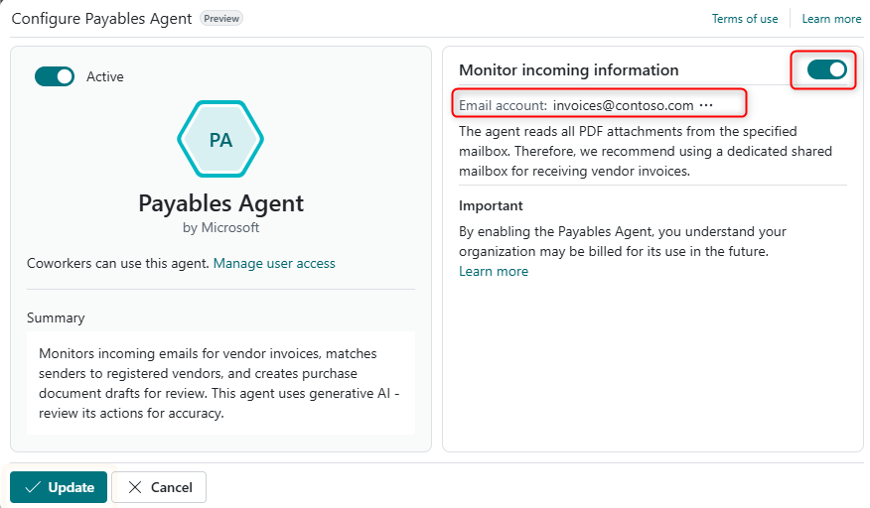
The Payables Agent is now significantly more capable. It monitors your inbox for vendor invoice emails, picks up messages with PDF attachments, automatically extracts invoice details, and categorises each processed email in Outlook – so your team always knows what the agent has handled and can avoid duplicate processing. The agent matches vendors and accounts, and queues documents for human review before any posting occurs.
The Payables Agent marks processed emails in Outlook, providing a clear audit trail for your AP team
Build Your Own Agents – No Specialist Coding Required
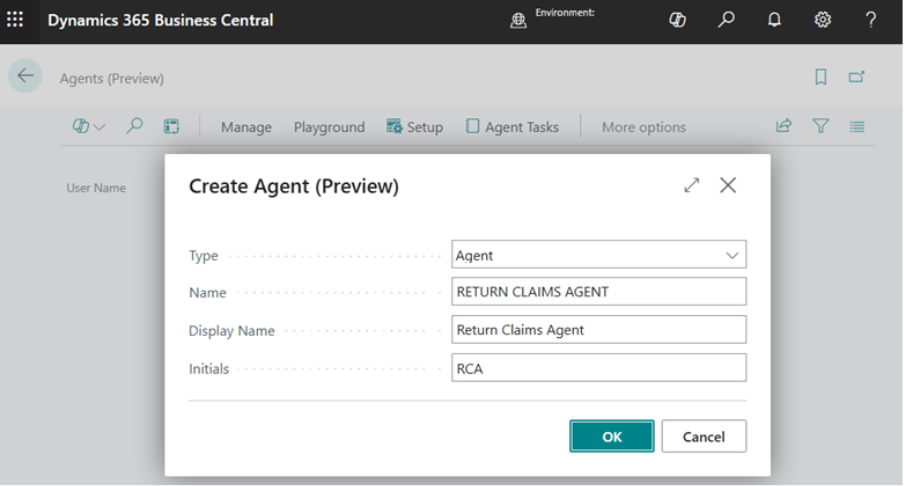
The new AI Development Toolkit introduces an in-product agent designer, giving consultants, product owners, domain experts, and developers the ability to create custom agents tailored to their own business processes. Agents are defined using natural language instructions – similar to writing prompts – and can be tested against real Business Central data in a sandbox environment before going live.
The Agent Designer Toolkit allows custom agents to be created, tested, and refined through a guided in-product experience
This removes the previous limitation of only being able to use Microsoft’s pre-defined agents. A wizard-style experience walks you through defining what the agent should do, setting permissions, and validating its behaviour – all without writing AL code.
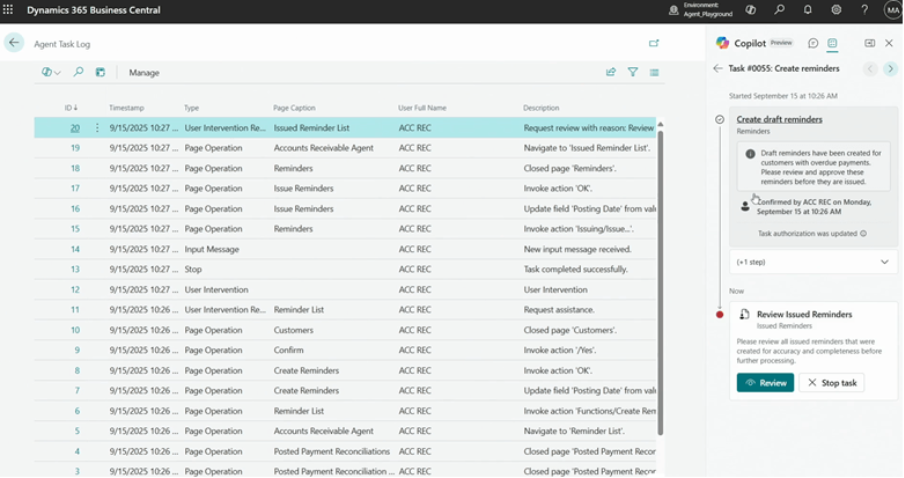
Agent Supervision and Traceability
A new task pane provides a consolidated view of all active agent tasks across finance, purchasing, sales, and operations. Every action taken by an agent is logged in a timeline view, with full audit trail visibility – essential for regulated industries and for building confidence in autonomous processing.
Admin Centre via MCP
Administrators can now connect AI agents to the Business Central Admin Centre through a new MCP (Model Context Protocol) server. Using tools such as Visual Studio Code, admins can ask agents to check update statuses, list installed extensions, copy environments to sandboxes, and more – without needing PowerShell scripts or custom Logic Apps.
Supply Chain: More Flexibility, More Control
Drop Shipment Improvements
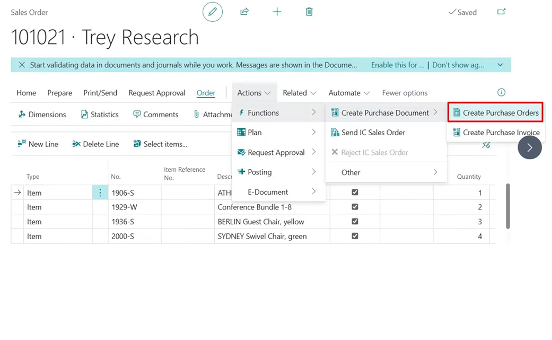
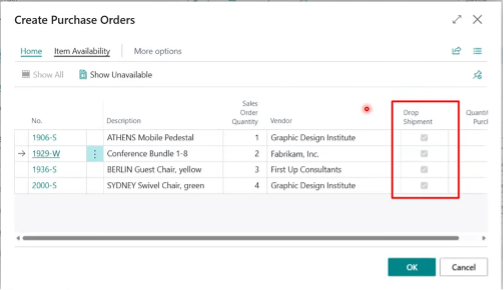
Creating purchase orders from drop shipment sales orders is now significantly more streamlined. A new ‘Create Purchase Orders’ action is available directly from the sales order, and the Planning Worksheet now includes a dedicated Drop Shipment action group with Get Sales Orders and Sales Orders actions.
Drop shipment purchase orders can now be created directly from the sales order, with the Planning Worksheet including a dedicated Drop Shipment action group
Service Management – One Order Per Line
When generating contract service orders, Business Central now respects the ‘One Service Item Line/Order’ setting. You can choose to create one service order per service item or a consolidated order for all items in a contract – providing much more flexibility for organisations with complex service agreements.
Subcontracting Capabilities
Manufacturing businesses benefit from enhanced subcontracting support, allowing for more sophisticated management of operations outsourced to third-party manufacturers or service providers – reducing the need for manual workarounds or external tools.
Quality Control
New quality management features enable organisations to define quality standards, track inspections, and manage non-conformities directly within Business Central – integrating quality control into everyday workflows and reducing reliance on manual processes.
Continue reading in Part 2 where we look at the upgrades to Financial Reporting, Electronic Documents and Shopify.